


😂 ADHD & Self-Deprecating Humor: When Laughing at Yourself Hurts More Than It Helps 😂➡️💙
From Self-Roast to Self-Boost 😂➡️💙: How Changing Your ADHD Humor Can Transform Your Confidence 🚀

The Fine Line Between Funny and Harmful 🎭
Ever found yourself joking, "Haha, I’m so scatterbrained, I’d forget my own head if it wasn’t attached!"?
As someone with ADHD, I lived on self-deprecating humor. It felt like a protective shield—if I made the joke first, no one else could.
But over time, I noticed something… Instead of feeling better, I felt worse. My self-esteem took a hit, and I started believing the jokes.
So I had to ask myself:
💡 Is my humor helping me … or hurting me?
Let’s break it down! 🚀
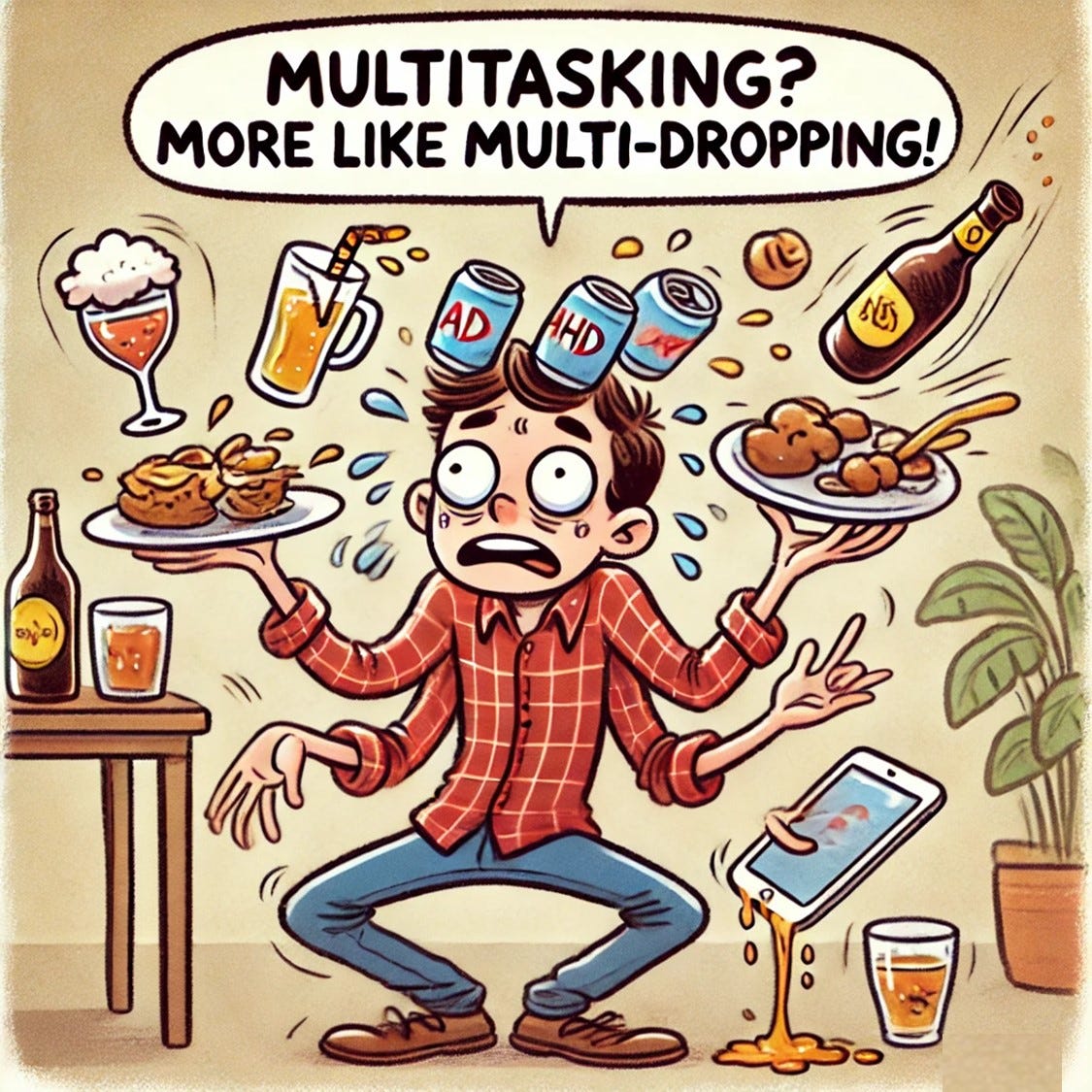
What Is Self-Deprecating Humor? 🤔
Self-deprecating humor is when you make yourself the punchline.
🧩 “I’m such a mess! How do I even function?”
🧩 “Classic me—never getting anything right!”
🧩 “ADHD brain strikes again. I swear I’m hopeless.”
It’s humor that highlights our flaws or mistakes, often in an exaggerated way.
⚖️ It can be both a tool and a trap. Sometimes, it makes social interactions easier. Other times, it becomes a way of reinforcing negative beliefs about ourselves.
For people with ADHD, it’s not just humor—it’s a way of masking insecurities and preempting criticism.
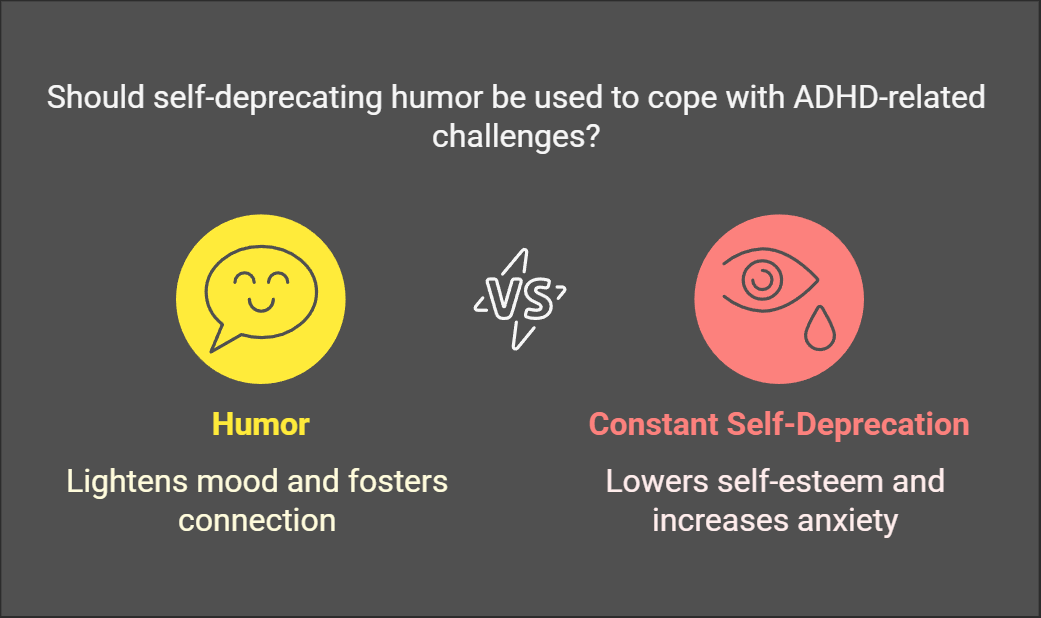
🔬 Why Do We Do It?
The Science Behind the Laughs 🧠
🔬 Studies show that self-deprecating humor can be a coping mechanism for those with low self-esteem and high self-criticism.
A study published in Personality and Individual Differences (2018) found that while self-deprecating humor is often linked to emotional resilience, for those with ADHD, it can do the opposite—reinforcing feelings of failure and imposter syndrome (Plessen et al., 2018)
🤯 Key reason: ADHDers often experience a lifetime of criticism, forgetfulness, impulsivity and “not living up to potential.” Making jokes about ourselves can feel safer than facing more judgment.

📉The Daily Impact:
How Self-Deprecation Affects ADHDers
While humor can lighten the mood, constant self-deprecation rewires our brain in a dangerous way:
💔 Lower Self-Esteem – Repeating jokes about being "a disaster" makes your brain believe it’s true.
💔 Increased Anxiety – Instead of diffusing tension, it creates a deeper fear of failure.
💔 Negative Self-Talk Spiral – The jokes stop being funny and start shaping how you see yourself.
Over time, these jokes go from funny → to familiar → to fact in our minds.
🙅♂️ Would you talk to a friend the way you joke about yourself?
When Does It Strike? 🚨
Self-deprecating humor doesn’t just happen randomly—it’s triggered by situations that make us feel vulnerable:
🔥 In Social Situations – When trying to fit in, especially in new groups.
🔥 After Making a Mistake – When we forget something, blurt something out, or get distracted.
🔥 At Work or School – When struggling with organization or deadlines.
🔥 When Feeling Judged – When someone already sees ADHD traits as "irresponsible" or "lazy."
Recognizing when we default to self-deprecation is key to changing the habit.
The Hidden Triggers 🚩
📍 Social Anxiety – ADHDers often struggle with rejection sensitivity. Humor becomes a shield.
📍 Perfectionism – When we can’t meet impossible standards, we joke about our failures first.
📍 Past Criticism – A history of being labeled “careless” or “lazy” can make us expect judgment.
😨 The fear?
That others see us as flawed - so we take control by beating them to the punch.
But this coping mechanism keeps us stuck in the cycle instead of helping us break free.

How to Shift the Narrative 🔄
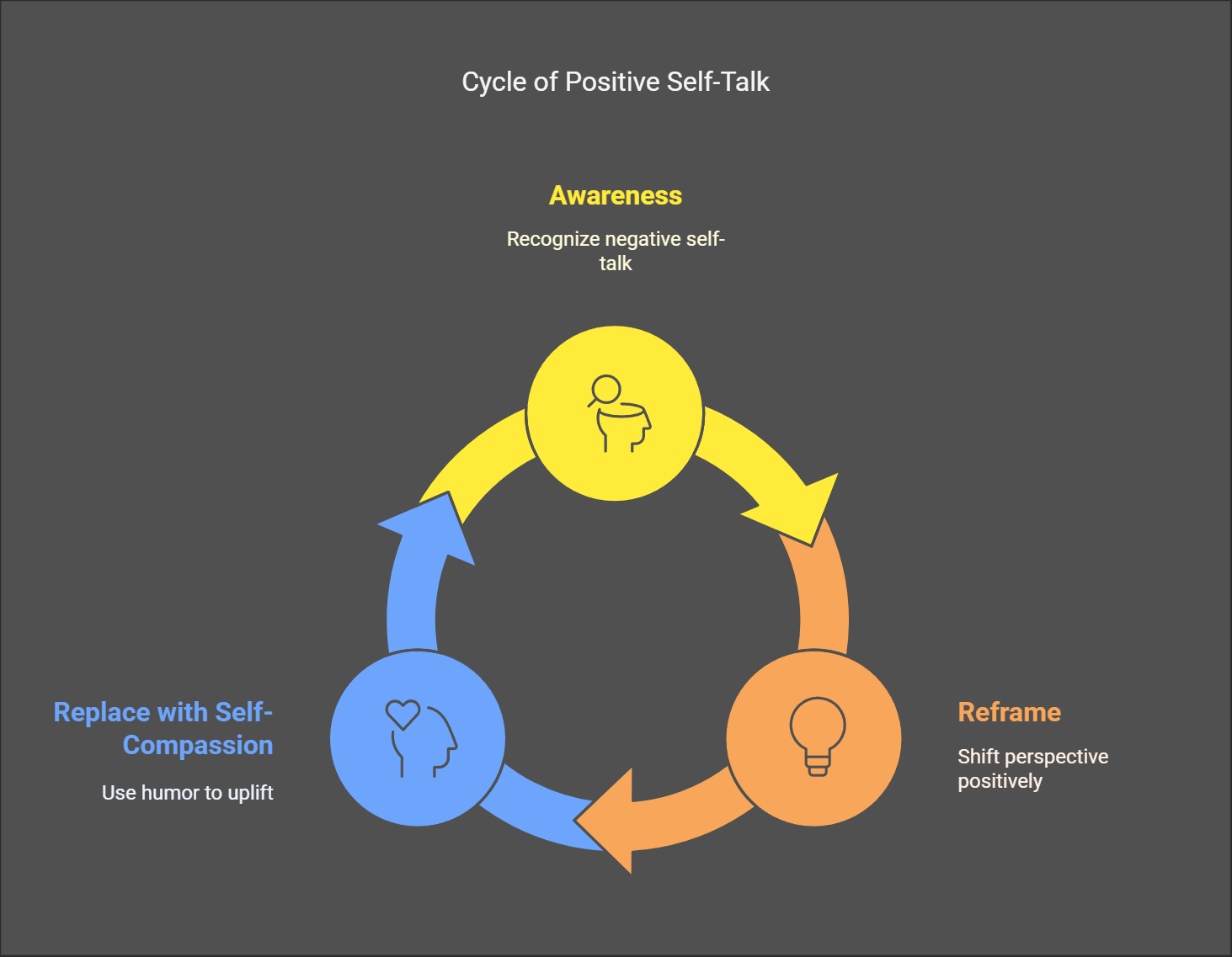
Time to rewrite the script! Instead of laughing at yourself, learn to laugh with yourself.
🔄 STEP 1: AWARENESS
Catch yourself before making a self-deprecating joke.
Ask: Would I say this to a friend?
🔄 STEP 2: REFRAME
Instead of “I’m a disaster,”
Try: “I’m figuring things out, and that’s okay.”
🔄 STEP 3: REPLACE WITH SELF-COMPASSION
Use humor to uplift, not tear yourself down.
Humor should be a tool for connection, not self-sabotage.
ADHD-Proof Strategies for Positive Humor 🛠️
✅ Reframe the Joke – Instead of “I’m a mess,” say “I’m creatively organized!”
✅ Use “Yet” – Instead of “I can’t do this,” say “I can’t do this… yet.”
✅ Celebrate Small Wins – ADHDers focus too much on mistakes. Celebrate the progress!
✅ Find the Right People – Surround yourself with friends who build you up, not tear you down.
Humor should highlight strengths, not reinforce shame.

Example: Before & After 🎭
🛑 BEFORE=
”Haha, my ADHD brain made me forget my meeting again! I’m such a failure."
✅ AFTER:
"Yep, I totally forgot my meeting, but hey—Google Calendar reminders to the rescue!"
See the difference?
One reinforces negativity, the other finds humor without self-destruction.
🚀 Quick Recap 🌀
💡 ADHDers often use self-deprecating humor as a defense mechanism.
💡 Science shows that it can reinforce negative self-beliefs instead of relieving stress.
💡 Triggers include social anxiety, perfectionism, and past criticism.
💡 You can reframe your humor to be positive and empowering instead of self-destructive.
🚀 YOU are not the joke. ADHD isn’t a flaw—it’s a different way of thinking.

💬 Final Thoughts
Self-deprecating humor might feel harmless, but over time, it shapes your self-perception.
The goal isn’t to stop laughing—it’s to start laughing in a way that lifts you up,
not tears you down. 💙
📚 ADHD-Friendly Resources & Links
🔗 Plessen et al., 2018
🔗 Psychology Today (2022)
🔗 ADDitude Magazine (2023)
📢 Now it's your turn!
💬 Comment – Do you use self-deprecating humor? Have you tried reframing it?
📢 Share – If this article helped you, share it with a friend who needs to hear this today!
Rgds,
Lud
I am a mental health therapist with AuDHD. In my work with clients, I have seen this over and over again, and I am glad that you have taken the E space to address it. One of my jobs as a therapist who uses humor regularly in session is to model how humor can be used to scaffold struggles instead of undermine them. The struggle is real.
*but you can’t stop 😅