
🍽️ The Dopamine Menu: The Simple System That Made Starting Feel Easy Again
A brain-friendly system to beat task paralysis, stop doomscrolling, and get moving without willpower

A few months ago I noticed something uncomfortable.
I wasn’t tired. I wasn’t busy. I wasn’t even overwhelmed.
I was just… stuck.
Sitting at my desk. Phone in hand. Scrolling for no reason. Not enjoying it. Not resting. Not starting anything either. Just stuck in that familiar ADHD state:
low motivation + low dopamine → paralysis.
So I tried:
a new planner
another timer
yet another productivity hack
self-criticism
Nothing worked.
Then I did something simple: I found out about how to use a Dopamine Menu.
And for the first time in a long while… starting felt easy again.
Not perfect — but noticeably better.
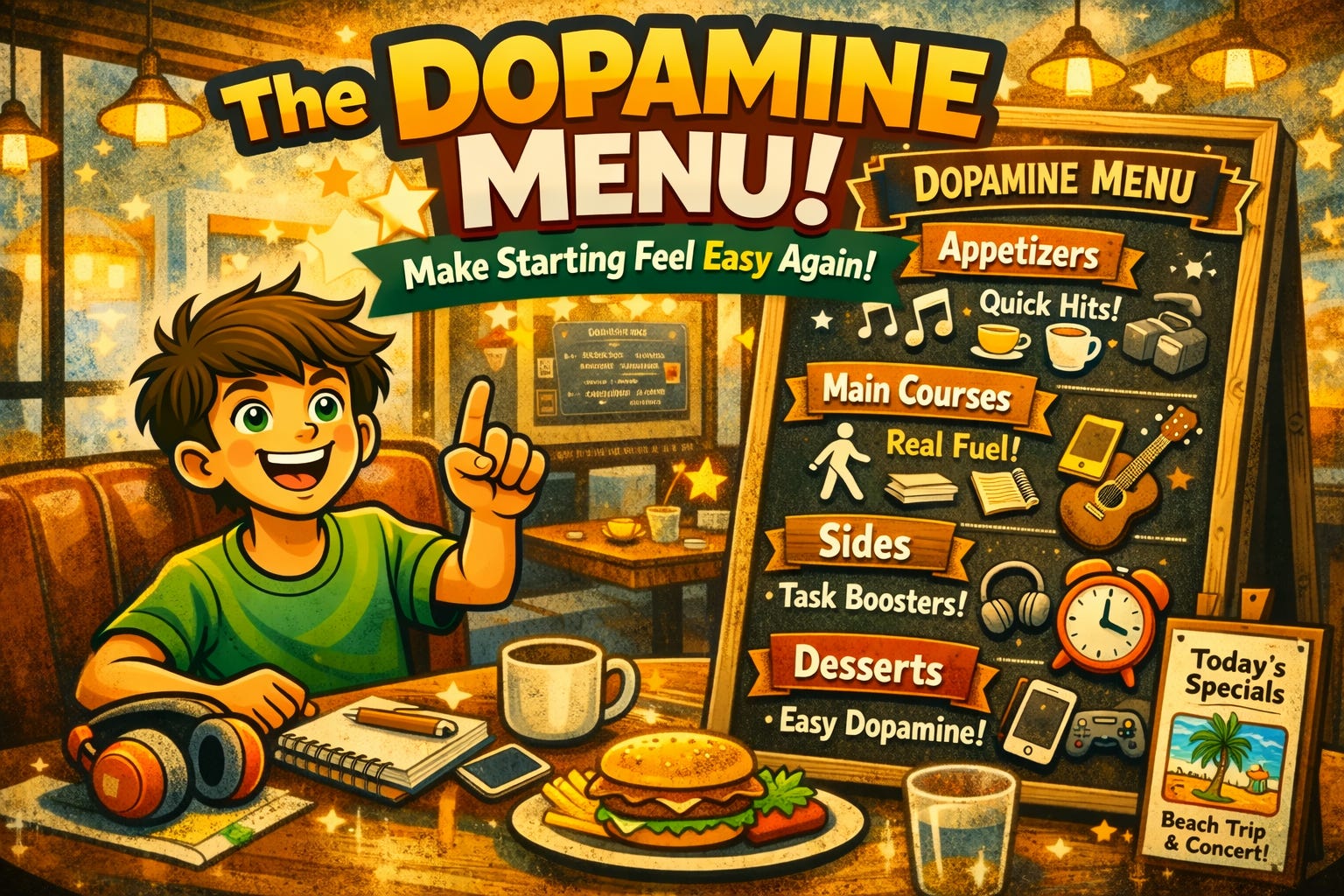
What you’ll learn in this article
🧠 Why your ADHD brain struggles to start (even when you care)
🔬 How dopamine actually drives motivation
🍽️ What a Dopamine Menu is (and what it’s not)
⚡ How to build one that works in real life
📊 Before/After: what changes when you use it
🧾 A cheat sheet you can copy today
📚 Science links supporting why this works
The real ADHD problem (it’s not discipline)
Here’s the key thing neuroscience shows:
ADHD isn’t just about attention — it’s also about motivation systems that are driven by dopamine.
Dopamine isn’t just a “happy chemical.” It signals motivation — whether the brain thinks a task is worth doing or not. Research from brain imaging and genetic studies shows that dopamine pathways — especially in areas linked to reward and motivation — function differently in ADHD.
Another study found directly that motivation deficits in people with ADHD correlate with dysfunction in the dopamine reward pathway itself.
This means your brain isn’t lacking desire —
it’s lacking the signals that tell it to start something.
And that’s a dopamine issue — not a moral failure.
Why “just start” doesn’t work
If dopamine drives motivation and initiation, but your dopamine signaling is weaker or dysregulated:
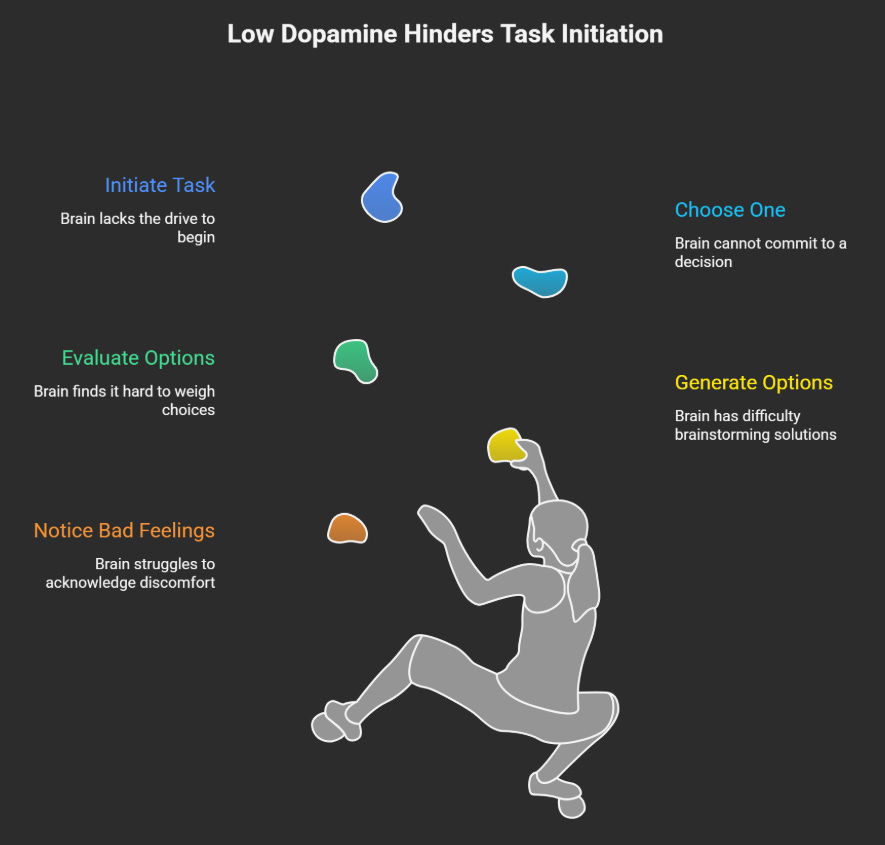
Your brain faces a huge challenge — it has to:
Notice you feel bad
Generate options
Evaluate them
Choose one
Initiate it
That’s five layers of executive function.
In a low-dopamine moment, that’s too much.
So your brain defaults to:
📱 scroll 🍪 snack 🧠 zone out 😞 procrastinate
Not because you “chose badly.”
But because your brain chose the easiest stimulation available.
The idea that changed everything
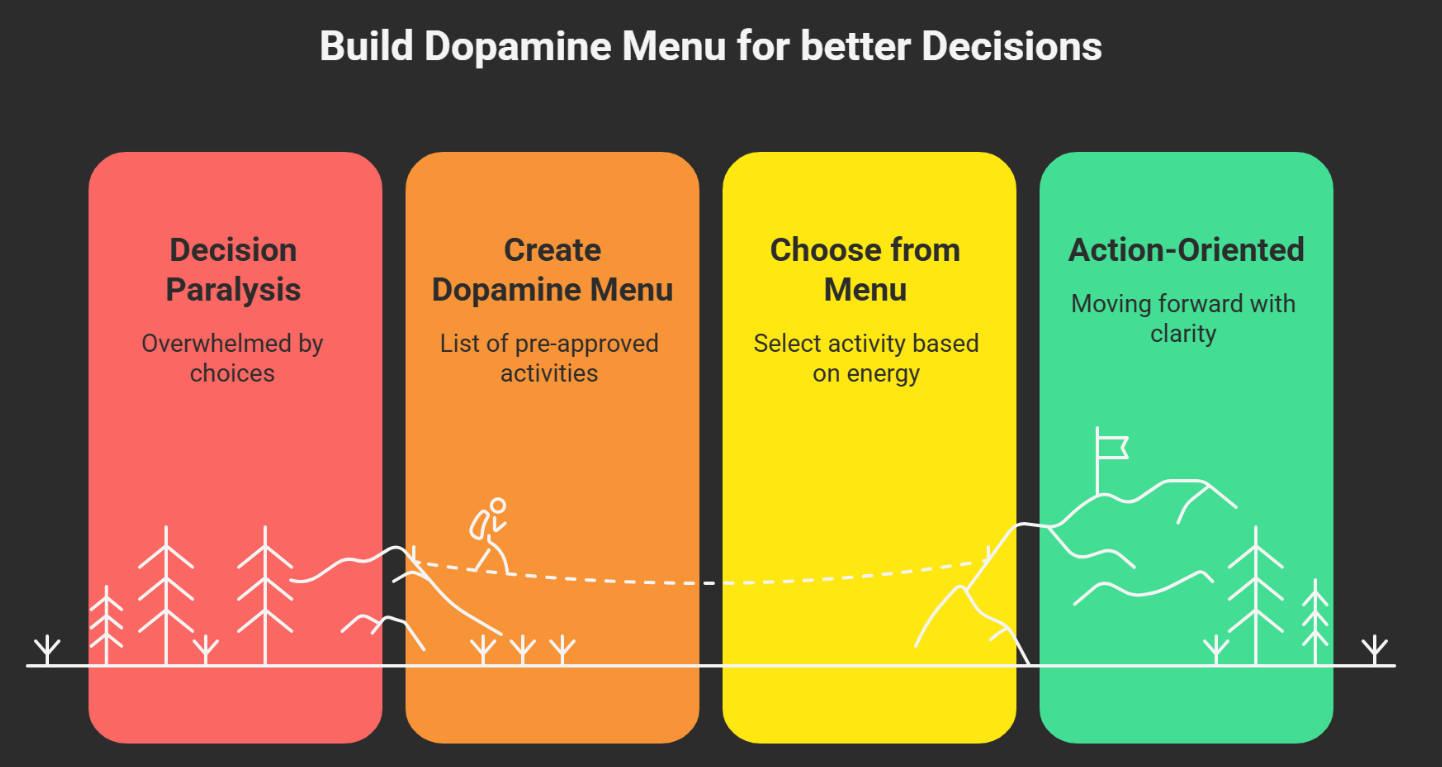
The breakthrough idea was simple:
Separate planning from choosing.
You take the decision-making burden off the moment when you’re low on dopamine and put it into a moment when you have more cognitive resources.
That’s what a Dopamine Menu does — it’s a list of activities your brain can pick from without having to invent, debate, or decide. You just look at the menu and pick something that matches your current energy and dopamine levels.
No paralysis. No overthinking. Just movement.
What a Dopamine Menu is (and isn’t)
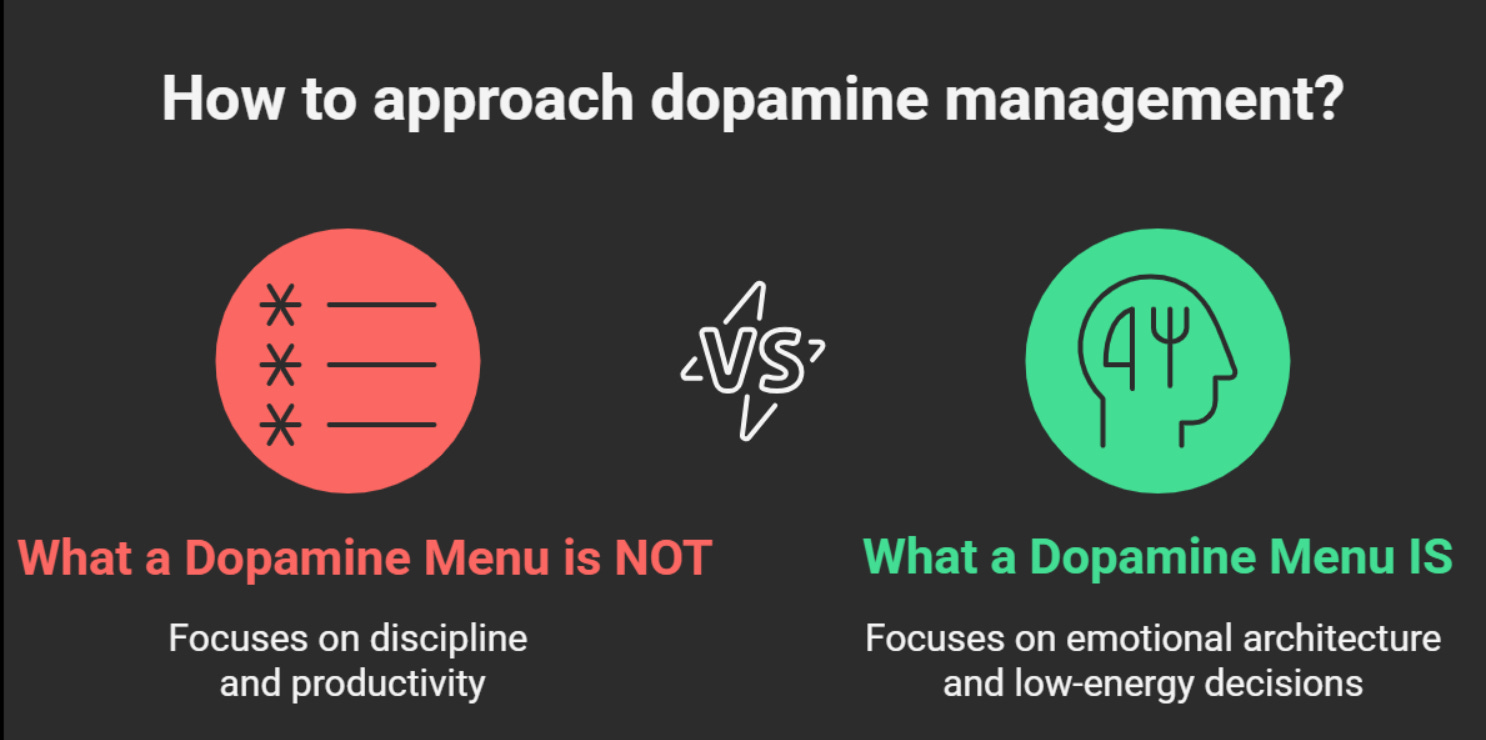
Let’s be clear:
A Dopamine Menu is NOT:
❌ a to-do list
❌ a productivity system
❌ a cure for ADHD
❌ a replacement for therapy or medication
It IS:
✅ emotional architecture for your brain
✅ a low-energy decision tool
✅ a system designed to work with how your dopamine works
✅ a practical way to meet your brain where it lives
It’s behavioral design, not discipline.
🔬 Why This Works (Scientific Backing)
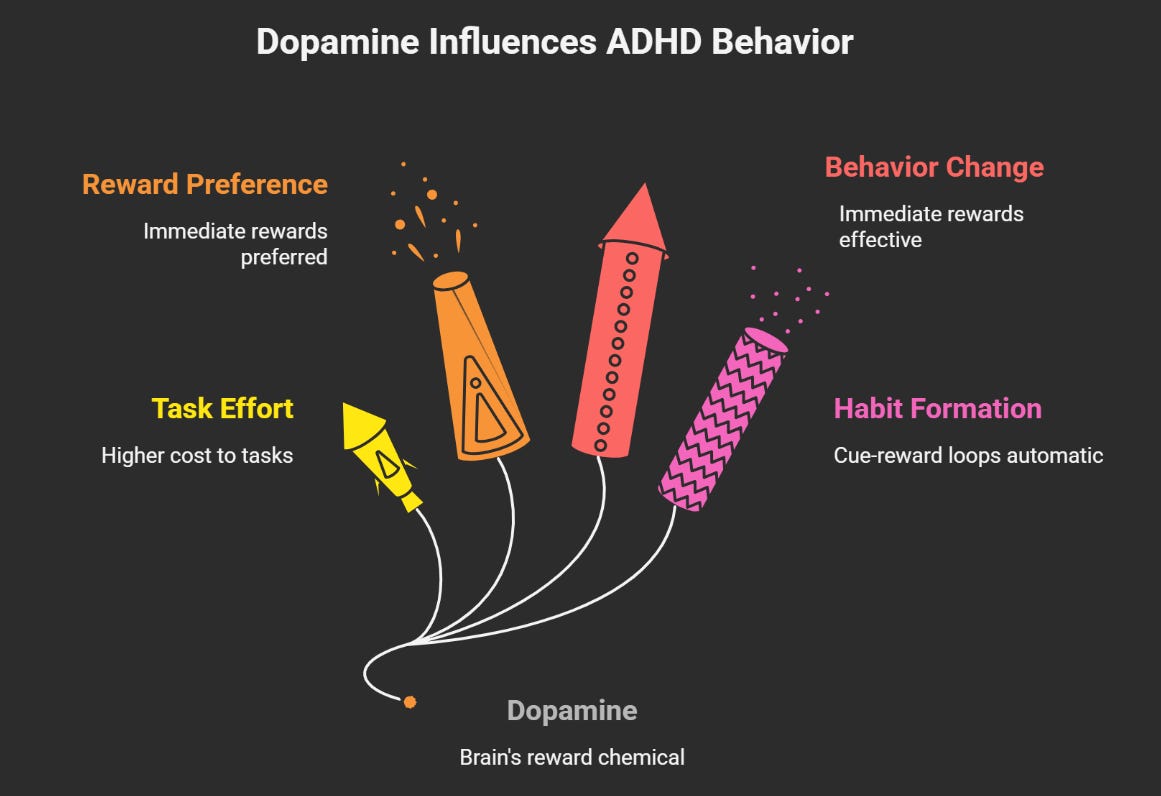
🧠 ADHD is associated with differences in dopamine signaling, especially in brain regions involved in reward, motivation, and effort. This means ADHD brains often need stronger or more immediate stimulation to initiate and sustain tasks.
Source: Dopamine in ADHD – JAMA (Volkow et al.)
🎯 Dopamine directly influences whether a task feels “worth the effort.” When dopamine is low, the brain assigns a higher cost to tasks, making them feel boring, overwhelming, or impossible to start.
👉Source: Dopamine and effort-based decision making – Westbrook & Braver
📈 People with ADHD show altered reward processing and stronger preference for immediate rewards, which explains procrastination, avoidance, and reliance on quick dopamine hits.
👉 Source: Delay aversion and ADHD – Sonuga-Barke et al.
🧩 Behavior change works best when immediate rewards are built into the environment. Systems that pair effort with small, frequent reinforcement are more effective for habit formation than relying on self-control alone.
👉Source: The neuroscience of reward – Berridge & Robinson
🔁 Habits form through cue–reward loops, not motivation or discipline. Reducing friction and increasing reward access makes behavior more automatic over time.
👉Source: Psychology of habit – Wood & Rünger
Science Bottom Line
This isn’t about laziness or willpower.
It’s about dopamine, reward prediction, and environment design — and the Dopamine Menu is simply a practical way to work with those systems instead of against them. 🧠✨
The restaurant model 🍽️
Imagine your brain is hungry — not for food, but for stimulation.
Instead of making your brain figure out what to do when it’s empty, you pre-decide good options it can choose from. Like a menu.
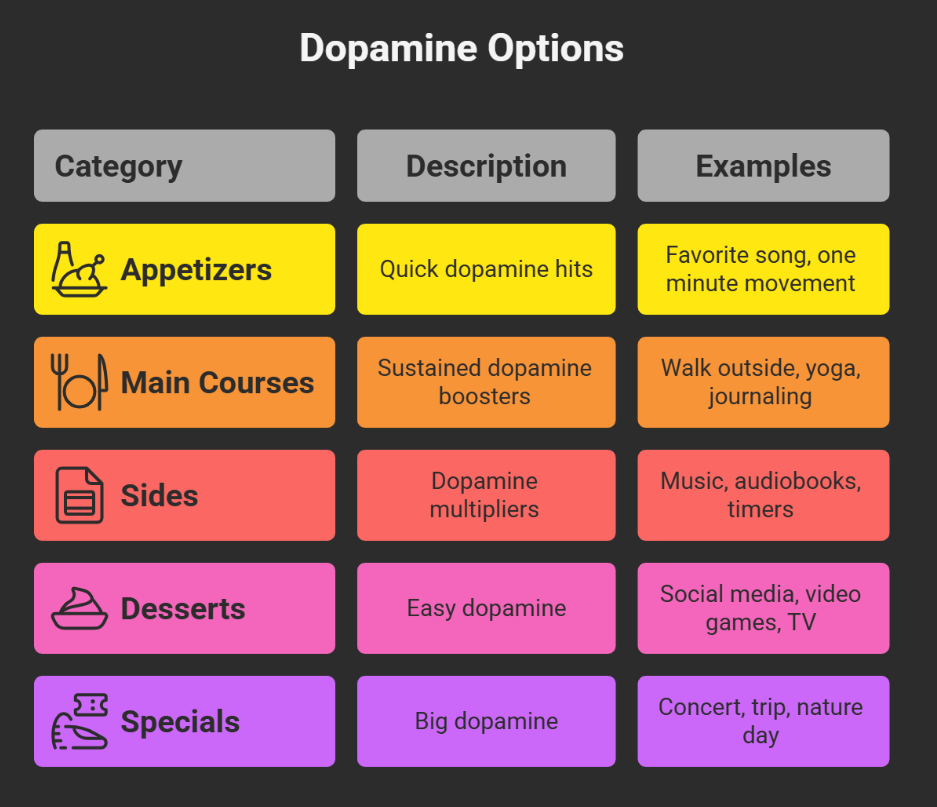
🥗 Appetizers — Quick dopamine hits
For when you’re stuck and need a spark.
🍵 favorite song 🤸 one minute movement ☕ drink ritual
🚿 cold water splash 🐶 pet interaction 🌤️ look outside
The goal is small wins that trigger dopamine without consuming hours.
🍝 Main courses — sustained dopamine boosters
These actually refill your motivation tank.
🚶 walk outside 🧘 yoga or stretching ✍️ journaling
🎨 creative hobby 🎸 instrument play 🍳 cooking 😴 nap
Activities with sustained reward can raise tonic dopamine levels more than quick hits alone.
🍟 Sides — dopamine multipliers
These make tasks less painful.
🎧 music / ASMR 📚 audiobooks ⏱️ timers
⚖️ gamified breaks 🤝 body doubling 🌀 fidget tools
They don’t replace the task, they “paint it with pleasure” so your brain tolerates it.
🍰 Desserts — easy dopamine
Fun. Fast. Low nutrition.
📱 social media 🎮 video games 📺 TV 🍬 sugar
Not evil — just low-yield in the long run.
Overuse often leaves dopamine homeostasis lower afterward.
⭐ Specials — big dopamine
High-effort, high-joy activities.
🎤 concert ✈️ trip 🏞️ nature day 🍽️ dinner with friends 💆 spa day
These fill your bucket, but are occasional.
Before vs After
Before
😵💫 bored 📱 doomscroll 🍪 snack 🧠 blank 😞 guilt
After
⚡ notice low dopamine 🍽️ open menu
🎧 pick something 🚶 take action
🙂 more momentum, less shame
Same brain. Different system.
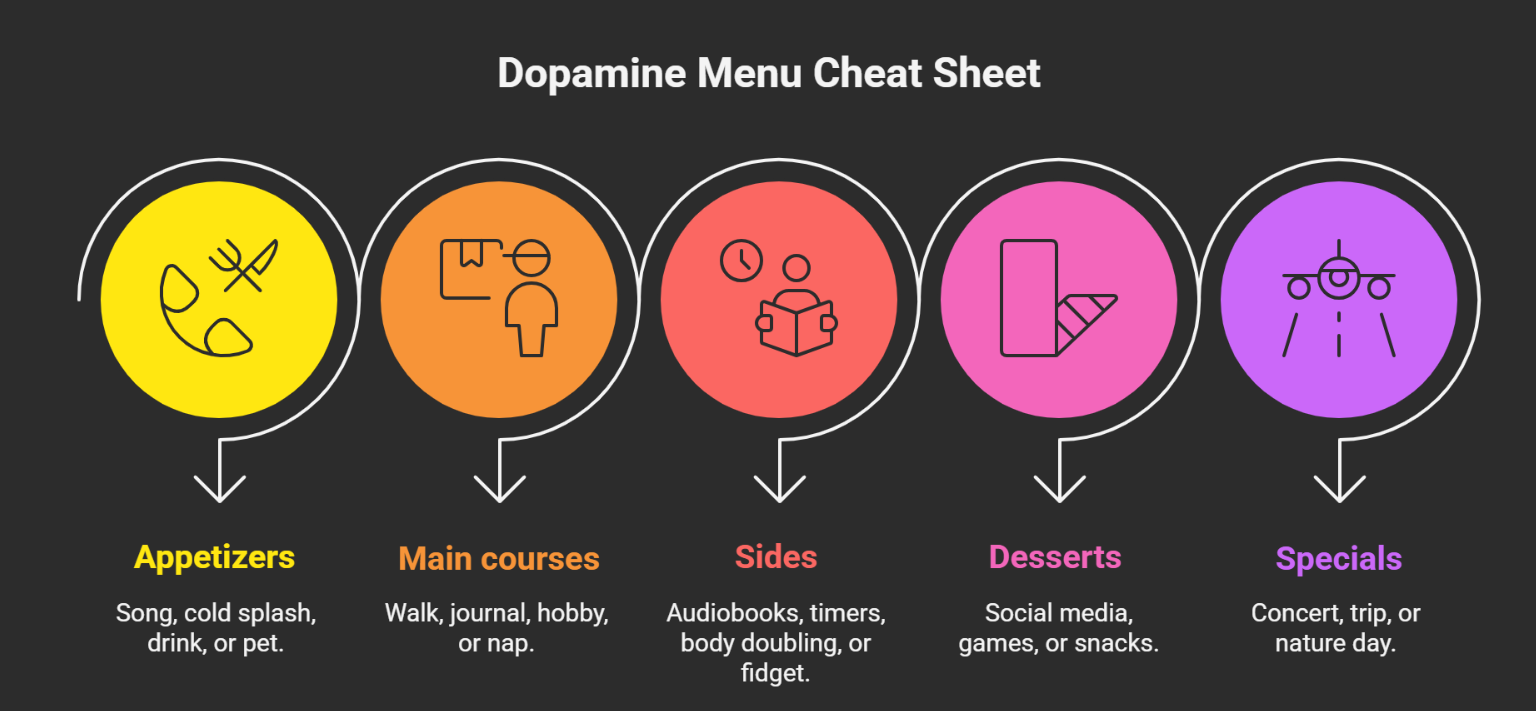
Dopamine Menu cheat sheet 🧾
Copy-paste this:
Appetizers:🎧 song | 🚿 cold splash | ☕ drink | 🐶 pet
Main courses:🚶 walk | ✍️ journal | 🎨 hobby | 😴 nap
Sides: 📚 audiobooks | ⏱️ timers | 🤝 body doubling | 🌀 fidget
Desserts: 📱 social media | 🎮 games | 🍬 snacks
Specials: 🎤 concert | ✈️ trip | 🏞️ nature day
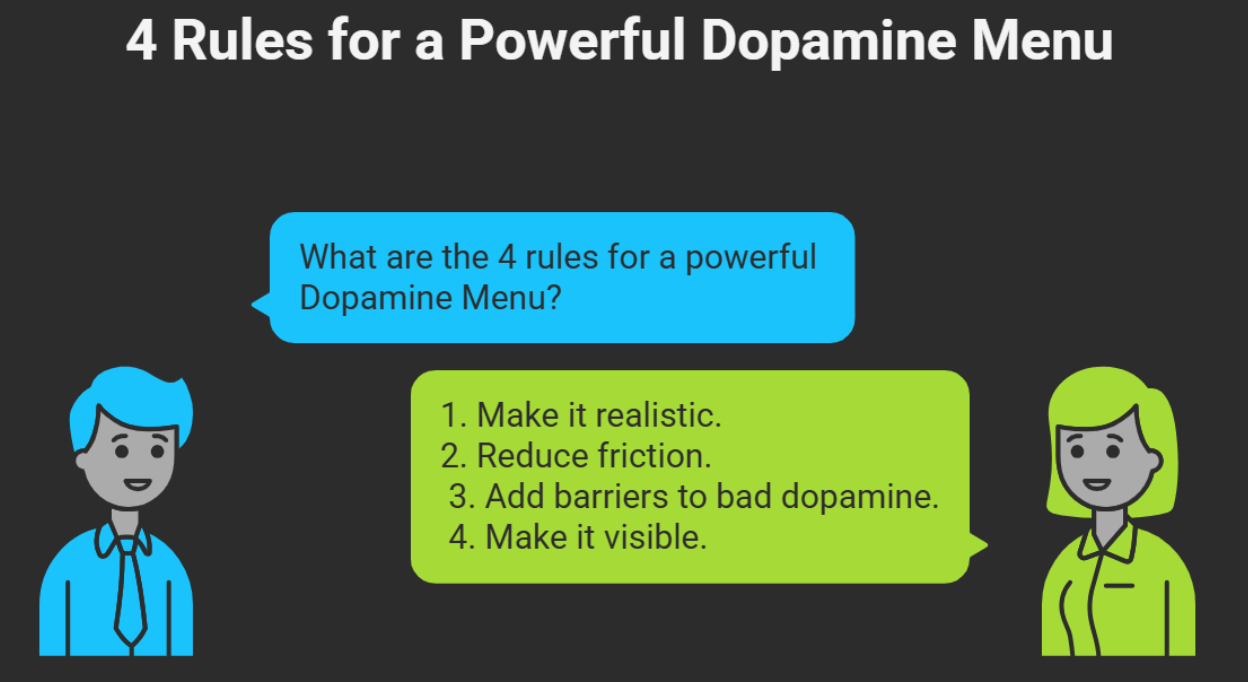
4 rules for a powerful Dopamine Menu
1. Make it realistic
If you wouldn’t actually do it → remove it.
2. Reduce friction
Shoes visible. Journal out. Music preloaded.
3. Add barriers to bad dopamine
Log out of apps. Phone in another room.
4. Make it visible
Fridge. Planner. Lock screen. Because low dopamine = bad memory.
Final thought 🧠✨
You don’t need more discipline.
You don’t need to force yourself harder.
You need:
smarter stimulation
fewer decisions
kinder systems
environments that help you move forward when you’re stuck
Your brain isn’t broken.
It’s just wired differently.
And now? You finally have a menu for it. 🍽️
💬 Call to action
Comment: What’s one item you’ll put on your Dopamine Menu today?
Share: Send this to the person who says: “I know what I should do, but I just can’t start.”
Subscribe: For more tools that work with your ADHD brain — no hustle, no shame, just science-backed feel-good systems. 🧠💙
Have some favorite music on.