
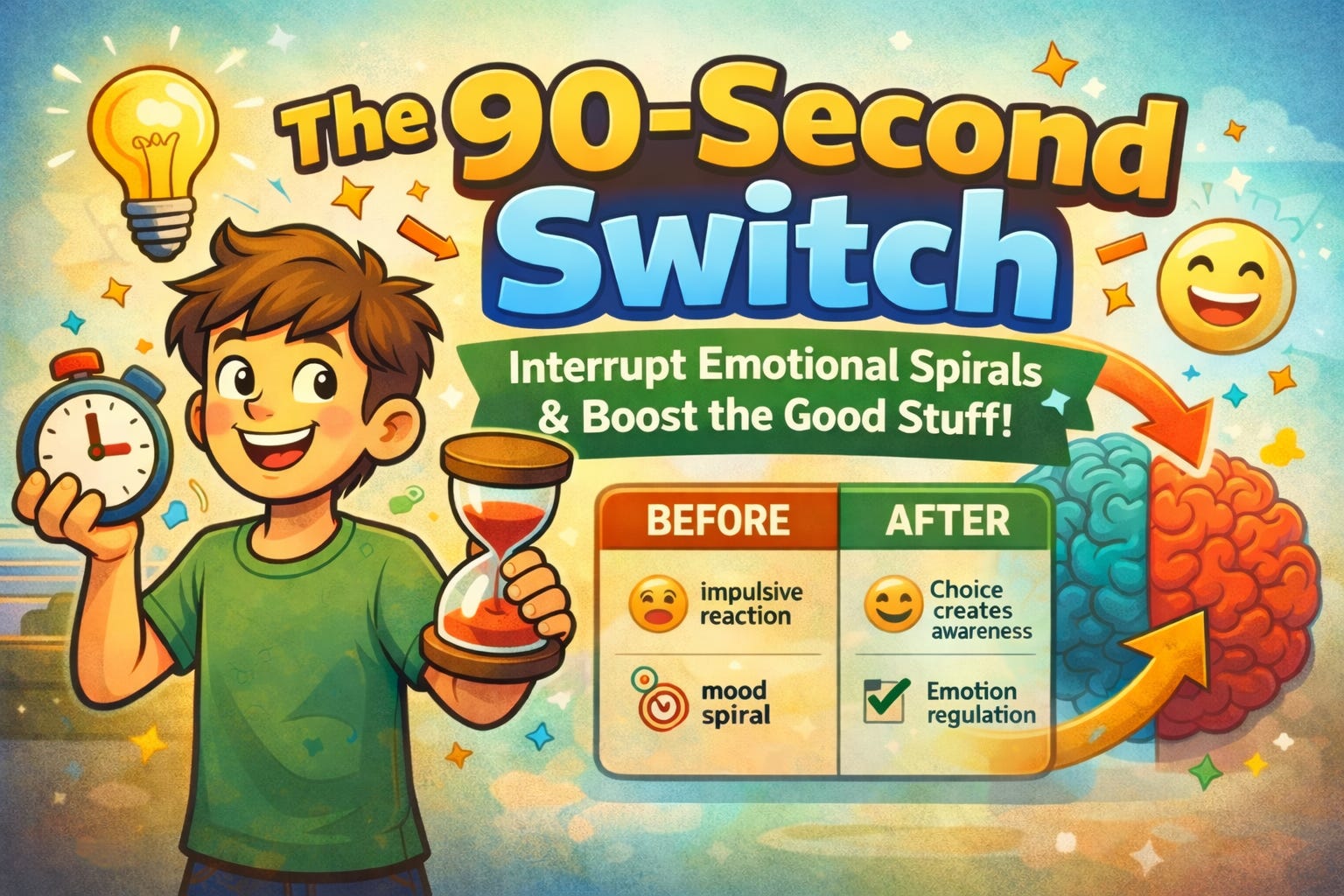
🧠 The 90-Second Switch
How ADHD Brains Can Stop Emotional Spirals — and Amplify the Good Ones

🎯Have you ever reacted emotionally… and 30 minutes later, thought:
“Why am I still feeling this?”
I used to believe my emotions were too strong, too much, or out of control.
But what I didn’t know and what no one explained, is that ADHD emotional dysfunction isn’t about emotions themselves.
It’s about what happens after they show up.
Once I understood the 90-Second Switch, everything changed:
Fewer emotional spirals
Faster recovery
And — surprisingly — more positive emotion when I wanted it
This article is the framework I wish I had earlier.
⭐ What Is Emotional Dysregulation in ADHD?
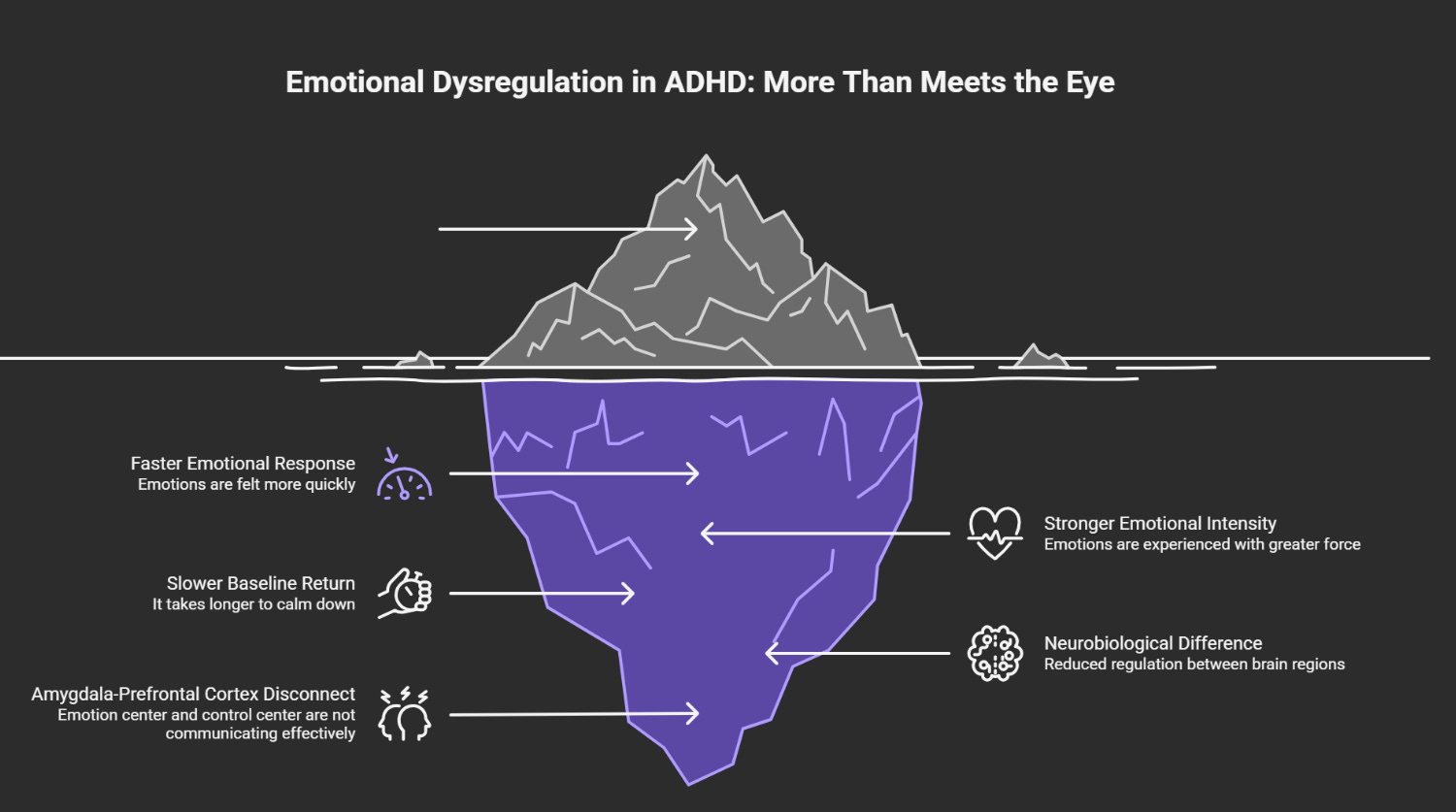
Emotional dysregulation isn’t a side issue in ADHD — it’s a core mechanism.
If you have ADHD, you may:
Feel emotions faster
Feel them stronger
Take longer to return to baseline
This isn’t a personality flaw.
It’s a neurobiological difference.
ADHD brains show reduced regulation between:
the amygdala (emotion center)
and the prefrontal cortex (control & inhibition)
That’s why emotions don’t just appear — they take over.
(Source: ADDitude, CHADD, Cleveland Clinic)
⏱️ The 90-Second Emotion Switch — Explained Simply
You may have heard the phrase:
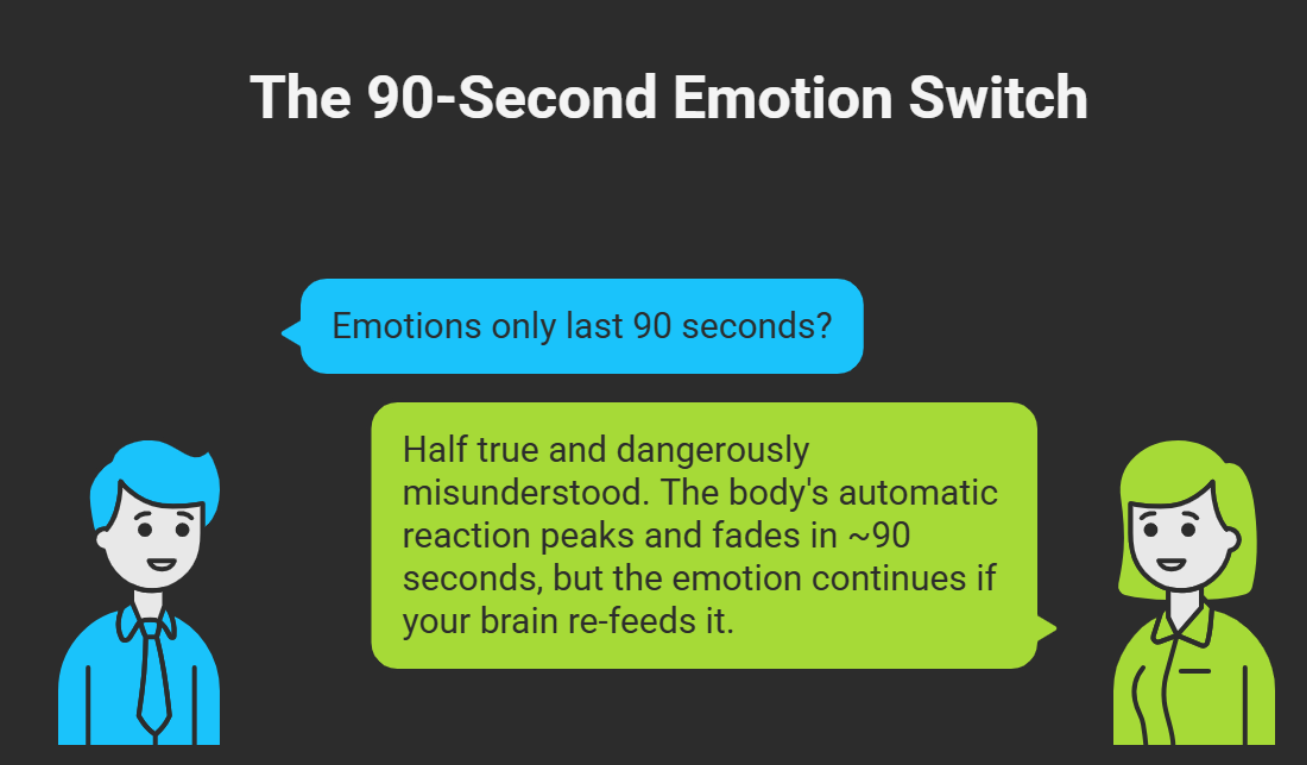
“Emotions only last 90 seconds.”
That statement is half true — and dangerously misunderstood.
Here’s the accurate version 👇
🧠 The science
When an emotion is triggered, your body releases chemicals (adrenaline, cortisol, dopamine)
That chemical surge peaks and fades in ~90 seconds
After that, the emotion continues only if your brain re-feeds it
So emotions don’t last 90 seconds 👉 the body’s automatic reaction does.
Everything after that is optional. That’s the switch.
🔬 Scientific Backing & References
🧠 Dr. Jill Bolte Taylor (Neuroscientist)
The origin of the 90-second physiological response concept. She explains how emotional reactions are driven by short-lived chemical surges unless reactivated by thought.
👉 Source– Jill Bolte Taylor⚡ Stress Hormones & the Body’s Emotional Response – Cleveland Clinic
Explains how adrenaline and cortisol spike during emotional stress and naturally decline when the threat passes.
👉 What Happens to Your Body When You’re Stressed – Cleveland Clinic🧠 Cognitive Reinforcement & the 90-Second Rule – Psychology Today
Shows how rumination and repeated thinking — not the emotion itself — prolong emotional distress.
👉 The 90-Second Rule Builds Self-Control – Psychology Today🔄 Emotional Dysregulation in ADHD – ADDitude Magazine
Details why ADHD brains struggle to disengage from emotional stimuli and why emotions feel more intense and longer-lasting.
👉 Emotional Dysregulation: ADHD’s Core Challenge – ADDitude
🔁 ADHD & the Emotional Feedback Loop
Here’s where ADHD changes the game.
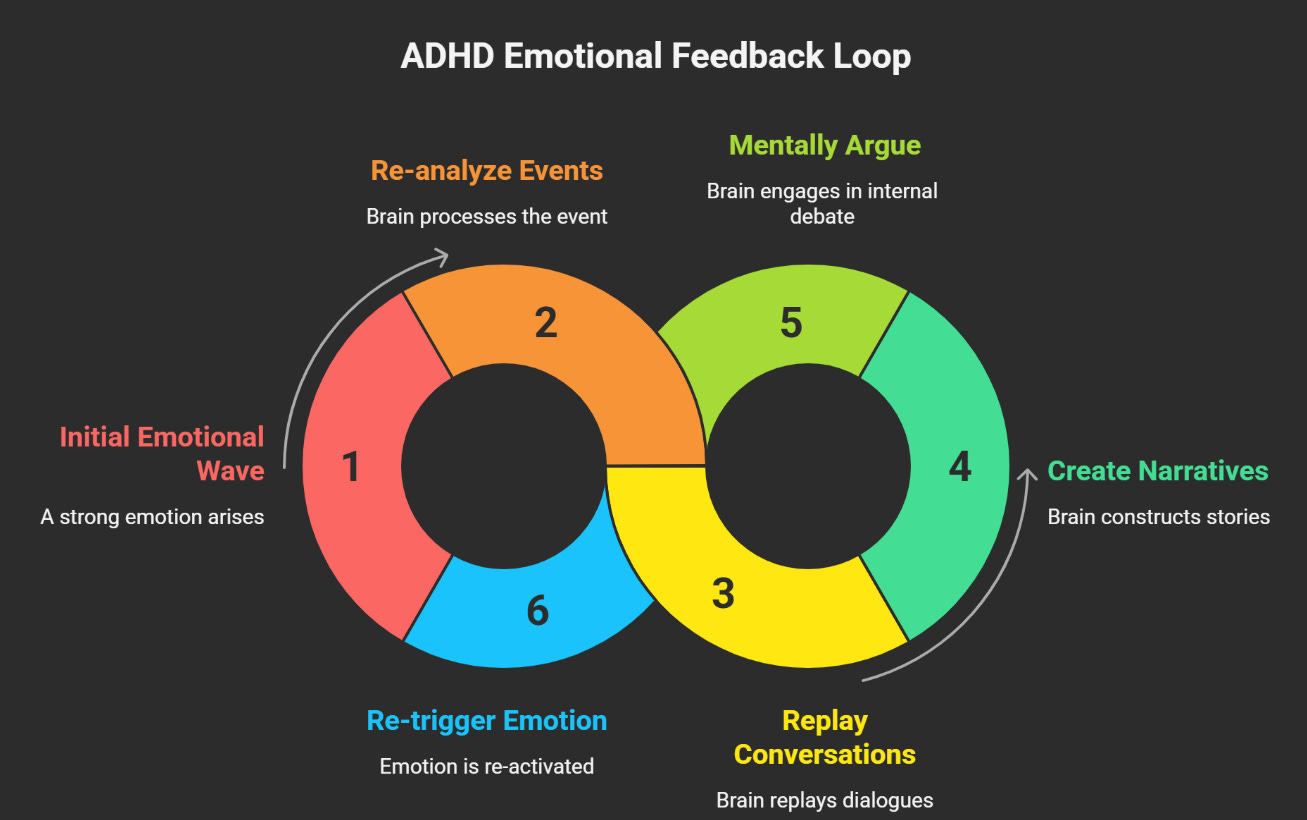
After the initial emotional wave, ADHD brains tend to:
Re-analyze what happened
Replay conversations
Create narratives
Mentally argue or justify
Each replay re-triggers the emotional response.
So what feels like:
“This emotion lasts forever”
Is actually:
The same 90 seconds, restarted over and over
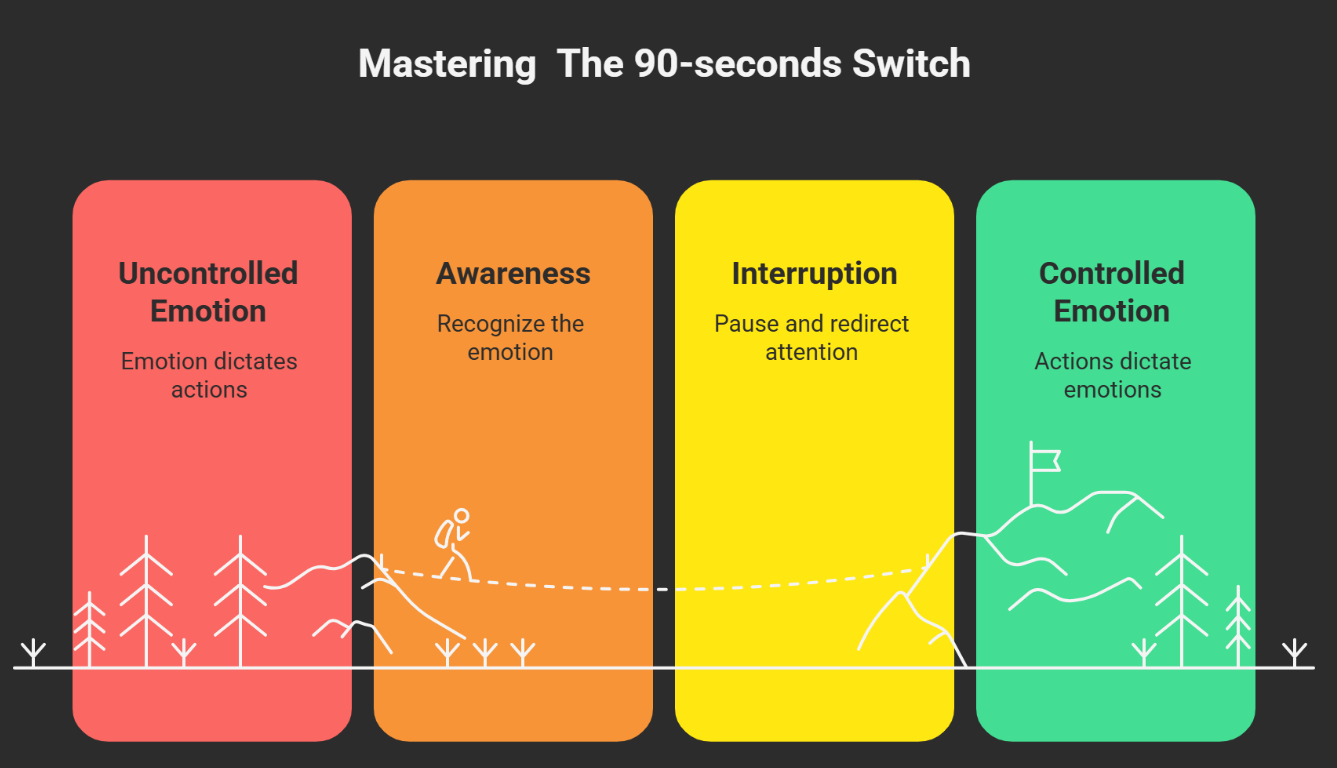
🚦 The 90-Second Switch
You don’t control the emotion.
You control whether you reinforce it.
After awareness kicks in, you have two paths:
❌ Reinforce it
Replaying
Ruminating
Venting immediately
Self-judging
➡️ Emotion grows or stays stuck
✅ Interrupt it
Noticing
Pausing
Redirecting attention
➡️ Emotion naturally fades
This works for negative AND positive emotions.
🔄 Negative vs Positive Emotions (This Is Important)
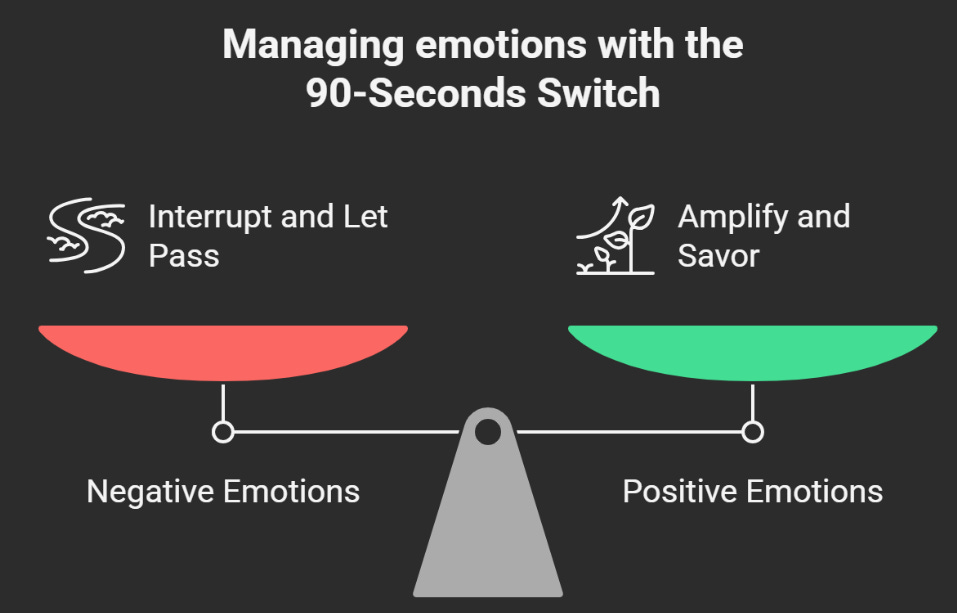
😖 Negative emotions
👉 Interrupt when you become aware
Don’t analyze yet.
Don’t explain yet.
Just let the chemistry pass.
😊 Positive emotions
👉 Amplify them when you notice
Stay with the sensation
Name it
Savor it
Positive emotions also fade if ignored.
🛠️ 5 ADHD-Friendly Strategies (Real-Life Usable)
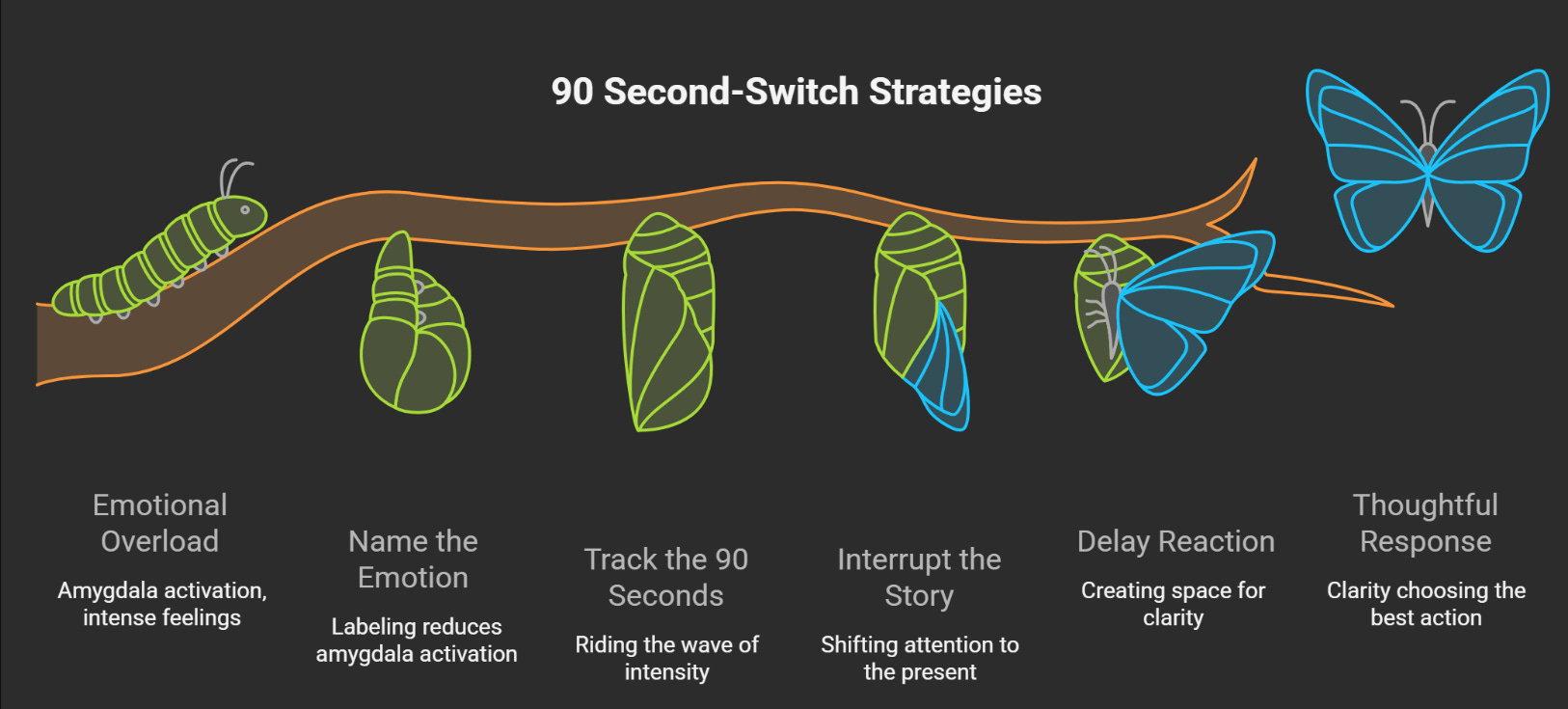
1️⃣ Name the Emotion
“I’m feeling frustrated.”
Labeling reduces amygdala activation.
2️⃣ Track the 90 Seconds
You can literally think:
“I’m in the wave.”
Most intensity drops if you don’t interfere.
3️⃣ Interrupt the Story
Shift attention to:
breathing
physical movement
sensory input
No mental debate.
4️⃣ Delay Reaction
Reaction = emotion driving
Response = clarity choosing
Even 10 seconds helps.
5️⃣ Decide After the Wave
Once intensity drops, then think.
🔍 Before vs After Awareness
🚨 Before the 90-Second Switch
😵 Emotion hijacks the entire day
🔁 Rumination feels automatic
⚡ Impulsive reactions take over
🌪️ One trigger = full mood spiral
🔒 Feeling stuck inside the emotion
🧠 After the 90-Second Switch
🌊 Emotion passes naturally
👁️ Awareness creates choice
🎯 Intentional responses replace reactions
🧘 Emotional flexibility returns
🔓 You feel with the emotion, not trapped in it
✨ Why This Matters for ADHD
You don’t need to control emotions. You just need to stop feeding them after the first wave. That’s the difference between being overwhelmed…
and being regulated. 💙
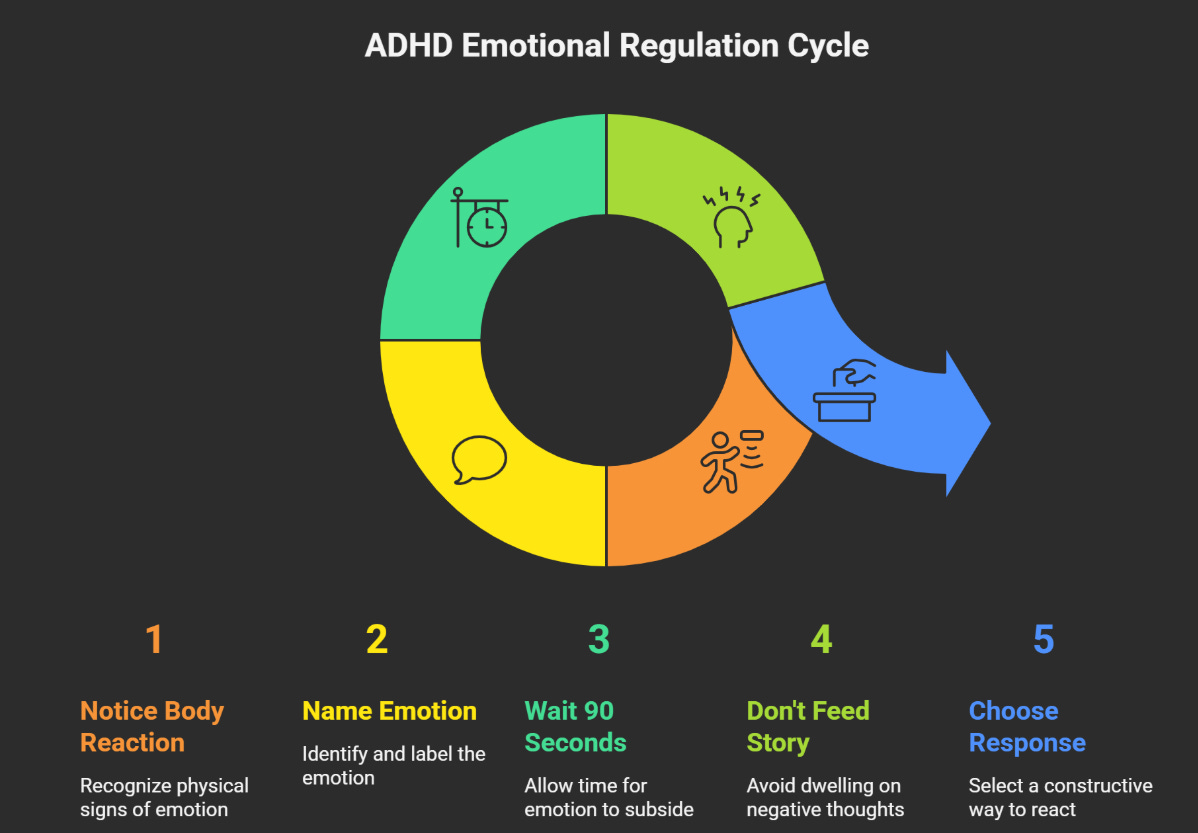
🧾 ADHD Emotional Cheat Sheet
When triggered:
Notice the body reaction
Name the emotion
Wait ~90 seconds
Don’t feed the story
Choose the response
Save this. Screenshot it. Use it.
🧠 Final Thought
ADHD doesn’t mean you’re too emotional.
It means:
your emotions arrive fast
and your brain struggles to disengage
The 90-Second Switch doesn’t remove emotions —
it gives you timing, space and choice.
And sometimes, that’s all we need.
You’re not broken.
You’re just learning the system. 💙
💬 Let’s Talk
👇 Comment:
Have you noticed emotions looping longer with ADHD?
🔁 Share this with someone who feels “emotionally overwhelmed”
📩 Subscribe to ADHD Wisdom Tools for short, practical ADHD insights you can actually use
📚 Related Articles From ADHD Wisdom Tools
(Emotional Regulation • Emotional Intensity • ADHD Dysregulation)
✨ Each of these pieces explores the same core problem from a different angle:
👉 what happens when emotions hijack the ADHD brain — and how to reclaim choice.
Together, they form a practical emotional regulation toolkit, not theory.
❤️ Emotional Regulation & Emotional Overload
❤️ Emotional Shutdown: How to Push Through When ADHD Makes You Freeze
How emotional overwhelm shuts down action and how to gently restart.
❤️ Why ADHD Anger Feels Instant (And How the 90-Second Rule Helps)
Why anger ignites so fast in ADHD and how to interrupt it before it takes over.
❤️ ADHD Rage: Why You Go From 0 to 100 (And What to Do Before You Snap)
Understanding emotional explosions and building a pause between trigger and reaction.
❤️ ADHD Avalanche: How to Stop Emotional Overload & Stay Calm During Interruptions
When small triggers pile up and how to prevent emotional collapse.
💡 Emotional Sensitivity & Triggers
💡 Rejection Sensitivity Dysphoria (RSD) & ADHD: Why Small Comments Feel Like an Emotional Tsunami
One of the most intense emotional regulation challenges in ADHD explained simply.
🧠 Emotional Regulation Meets Impulsivity
🧠 ADHD & Blurting: Why It Happens and How to Control It
How emotional dysregulation fuels impulsive speech and how to slow it down.
The dopamine-emotion connection you mention here is crucial. So many adults I meet think they're "too sensitive" when actually their emotional regulation system is working with different neurochemical wiring. The amygdala doesn't care about social acceptability—it just responds.
"The same 90 seconds, restarted over and over" — that single sentence does more work than most explanations I've read.
The framing around positive emotions is what I'll be thinking about for a while. We almost never talk about using the same mechanism to extend joy rather than just manage distress.
I really appreciate how carefully you handled the science here. Strong piece!